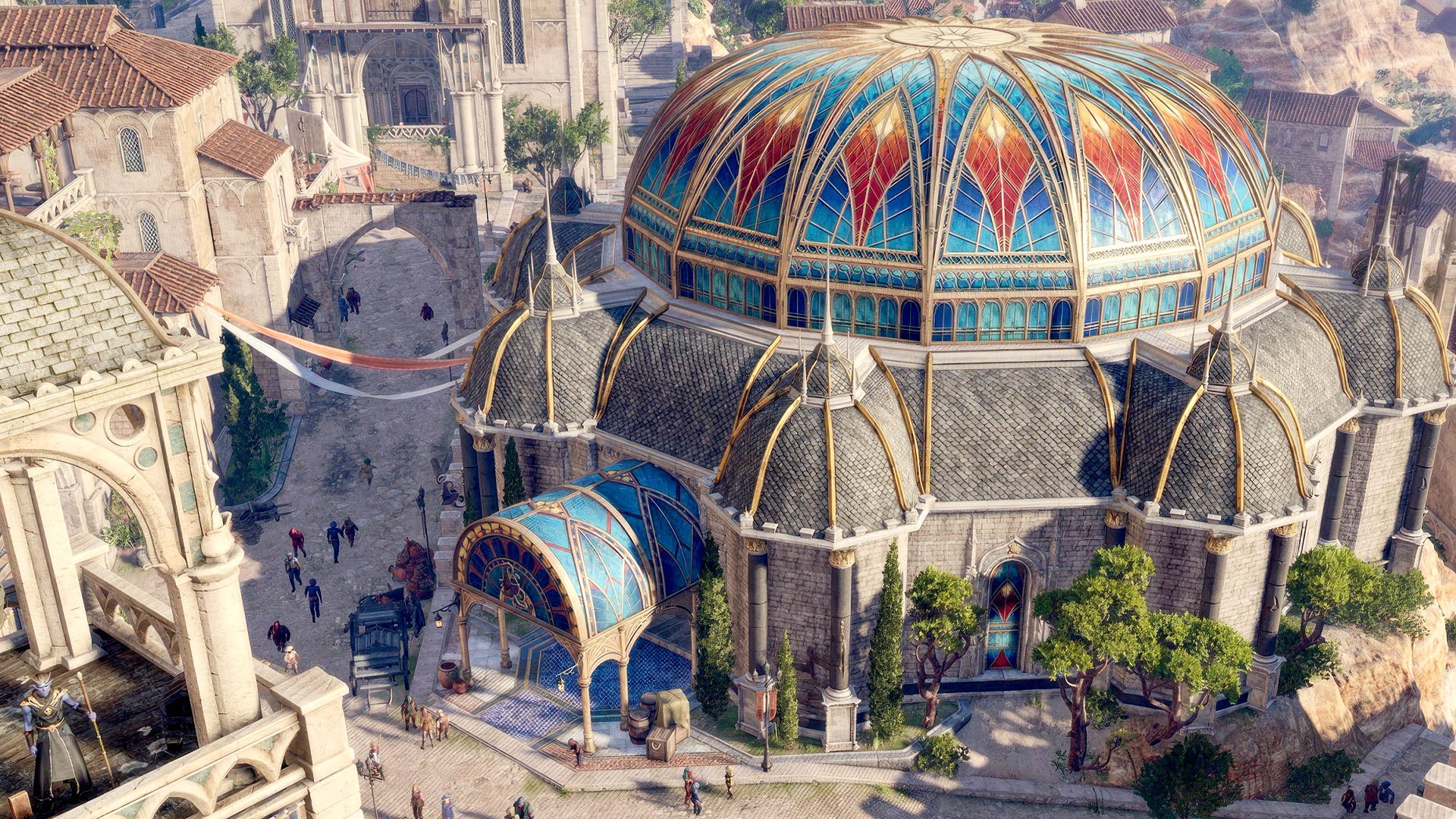
Shortly after our main Baldur’s Gate 3 content ‘dropped’ last week, I noticed a range of comments suggesting that the further you played into it, the more the performance characteristics changed. Early access veterans wanted more specific testing of the third act in particular and thanks to a game save bestowed upon us by Twitter user DarknessFX, we had access to a 99-hour save and were ready to dive into some stress test performance testing.
So, what’s so special about the third act? Put simply, it’s all about density, with the action shifting to the city of Baldur’s Gate itself, a large city in the series lore, with many NPCs. In my core review last week, I noticed that mid-spec PCs struggled in more populous areas and just running through the city demonstrates that the NPC count here is significantly higher. The density here adds considerably to the CPU burden – and I think it amplifies other issues as a result, not visible in our initial work.
One of the quirks of this heavier performance in Act Three is that movement makes the game visibly heavier on the CPU. In one particular static scene, I noted a 90fps frame-rate on a Core i9 12900K, but just moving the character around in mini-circles hit performance by 20 percent, even though the view and amount of objects on-screen is essentially the same. The frame-rate is lower, but more pertinently, frame-times are spikier.
Another issue found in the third act arises from camera transitions into cutscenes or conversations, something which happens consistently in areas in this area. Transitioning into cutscenes normally causes high CPU usage anyway, but with a generally higher CPU burden in the third act, these pauses to get into conversation are now visibly and noticeably worse. However, the biggest effect you will notice in taxing scenes found in the third act comes down to general frame-time stability – or ‘frame health’ as I call it. This is better explained visually in the embedded video, but when frame-times can increase by anything from 50 to 100 percent, this presents as stutter. Compounding this are the earthquakes in the city – each earthquake also coincides with multiple large spikes to frame-time, which present like noticeable stutters.